It was once again time for me to conduct my Coastal Waterbird Survey and after spending the morning with Jenny I headed out for Gonzales Point. The only problem was, there was a 28km marathon on, and almost every road I needed to go down was closed off. Added this inconvenience, was the fact that each of the 3 marshalls that I spoke to had no idea how to get around the joggers and to my destination. They all confessed to not being local and had no idea of any street names. Marvelous.
My 10 minute drive took 40 minutes, but on the upside I was just about the first person through onto the route as the marathon had come to an end by the time I'd arrived at Oak Bay! Consequently, there were fewer people and dogs around the coast as would normally be the case on a warm, sunny Sunday afternoon. Result.
The survey wasn't overly exciting, but did included the following highlights:
61 Bonaparte's gulls, 116 surf scoter, 35 black oystercatcher, 25 harlequin ducks, 4 horned and 2 red-necked grebes.
Various common alcids were counted, including a lowly single marbled murrelet.
Shorebirds were extremely thin on the ground, with just the oystercatchers and handful of black turnstones seen. Trail Island was hosting good numbers of black-bellied plover, but they were all outside my count area.
I was surprised by the lack of passerine migrants, given that the trees on our street were positively dripping with yellow-rumped warblers and ruby-crowned kinglets this morning... I was rather hoping to stumble across some Lapland longspurs (buntings in English), but I was out of luck.
Post-survey, I headed on to Cattle Point to have a look there. The parking area was rammed when I arrived, and any thoughts of feeding sparrow/bunting/finches rapidly evaporated.
I did find 5 savannah sparrows, but that was it.
Looking offshore there were well into double figures of marbled murrelets, plus the commoner species. Around 20 Bonaparte's gulls were feeding noisily over the water.
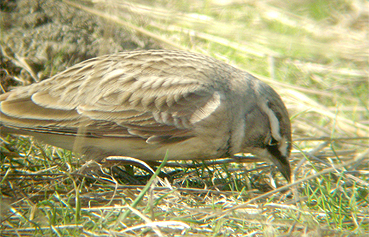
I went and checked the bluff in the south-west corner and was pleased to find a group of 4 horned larks. The birds were quite wary were seemingly used to the flow of people who were spectacularly ignoring them, and would resume feeding soon after being disturbed. Here's a badly digiscoped pic of one of the larks.
Showing posts with label bonaparte's gull. Show all posts
Sunday, 9 October 2011
Friday, 2 September 2011
Fall birding picks up a pace...
Popped down to the Government House grounds this morning in search of passage migrants. Didn't discover anything too thrilling, but there were certainly numbers of birds present.
In among a couple of bushtit flocks I came across at least 8 Wilson's warblers, 1 very grey-headed orange-crowned warbler (without a tail), 2 willow flycatchers and a drab female western tanager. Of course, the regular chestnut-backed chickadees, brown creepers, red-breasted nuthatches and what-have-you were all in attendance too.
A sharp-shinned hawk came through, hotly pursued by a trio of angry Anna's hummingbirds.
Otherwise, the other highlight was a very noisy young racoon (or racoonlet, as I like to call them) that was clambering around in an oak, while its mother kept watch below. It wouldn't keep still enough for a good pic, so here's the best I could manage.
In the evening I nipped down to Clover Point to see what was going on. Gulls. That's what was going on. Thousands of gulls. The rocks below the point were covered with glaucous-winged and California gulls, with about half a dozen Heermann's gulls thrown in. Offshore, birds simply carpeted the water. Among the large rafts of gulls were good numbers of rhinoceros auklets, common murres, a few pigeon guillemots and at least 5 marbled murrelets.
Small groups of red-necked phalaropes were moving around, and a string of phalaropes were picking delicately at the surface. I counted a total of 106. Here's a fuzzy picture of just 2 of them.
As the tide continued to rise, a moulting adult black-bellied plover flew in, joining 4 black turnstone on the rocks.
Thursday Coastal Birds
In between various bits of more important stuff, I managed a couple of hours of coastal birding yesterday.
Starting off at Clover Point, I just about managed to check through the roosting gulls before the rock-jumping hordes and cavorting canines did their best to rid the area entirely of avian life.
Among the multitude of California and glaucous-winged gulls were 9 Heermann's gulls, 5 mew gulls and a single Bonaparte's gull (pictured). Yet more gulls were scattered around offshore but the lingering morning fog made seawatching a waste of time. Within range, I could just about make out good numbers of rhinoceros auklets and common murres, but little else.
Heading along the coast toward Oak Bay I made a few stops at likely looking spots, but found little more than I'd seen at Clover Point.
At Oak Bay Marina things picked up a little. The big yellow rocky island, so beloved of roosting shorebirds, was once again the focus of attention. 'Scoping from Turkey Head, I counted 83 black-bellied plover, 1 dowitcher, 14 black turnstone and a surfbird. At one point the plovers all took to the air, showing a full complement of black axillaries, ruling out the presence of any attendant golden plovers.
On the beach, a group of 7 killdeer were feeding alongside a single spotted sandpiper. Nearby several black oystercatchers were seen, with a further 3 killdeer. 4 greater yellowlegs were feeding along the shore.
Although I take killdeer totally for granted these days, it's not all that long ago that had I received a call telling me that one was running around on Heysham Golf Course, I'd have been off like a shot to see it. With that in mind, here's a nice pic of one of the Oak Bay birds, just to remind myself of just how smart they really are (and to rub my Brit birder buddies' noses in it a bit...).
In among a couple of bushtit flocks I came across at least 8 Wilson's warblers, 1 very grey-headed orange-crowned warbler (without a tail), 2 willow flycatchers and a drab female western tanager. Of course, the regular chestnut-backed chickadees, brown creepers, red-breasted nuthatches and what-have-you were all in attendance too.
A sharp-shinned hawk came through, hotly pursued by a trio of angry Anna's hummingbirds.
Otherwise, the other highlight was a very noisy young racoon (or racoonlet, as I like to call them) that was clambering around in an oak, while its mother kept watch below. It wouldn't keep still enough for a good pic, so here's the best I could manage.
In the evening I nipped down to Clover Point to see what was going on. Gulls. That's what was going on. Thousands of gulls. The rocks below the point were covered with glaucous-winged and California gulls, with about half a dozen Heermann's gulls thrown in. Offshore, birds simply carpeted the water. Among the large rafts of gulls were good numbers of rhinoceros auklets, common murres, a few pigeon guillemots and at least 5 marbled murrelets.
Small groups of red-necked phalaropes were moving around, and a string of phalaropes were picking delicately at the surface. I counted a total of 106. Here's a fuzzy picture of just 2 of them.
As the tide continued to rise, a moulting adult black-bellied plover flew in, joining 4 black turnstone on the rocks.
Thursday Coastal Birds
In between various bits of more important stuff, I managed a couple of hours of coastal birding yesterday.
Starting off at Clover Point, I just about managed to check through the roosting gulls before the rock-jumping hordes and cavorting canines did their best to rid the area entirely of avian life.
Among the multitude of California and glaucous-winged gulls were 9 Heermann's gulls, 5 mew gulls and a single Bonaparte's gull (pictured). Yet more gulls were scattered around offshore but the lingering morning fog made seawatching a waste of time. Within range, I could just about make out good numbers of rhinoceros auklets and common murres, but little else.
Heading along the coast toward Oak Bay I made a few stops at likely looking spots, but found little more than I'd seen at Clover Point.
At Oak Bay Marina things picked up a little. The big yellow rocky island, so beloved of roosting shorebirds, was once again the focus of attention. 'Scoping from Turkey Head, I counted 83 black-bellied plover, 1 dowitcher, 14 black turnstone and a surfbird. At one point the plovers all took to the air, showing a full complement of black axillaries, ruling out the presence of any attendant golden plovers.
On the beach, a group of 7 killdeer were feeding alongside a single spotted sandpiper. Nearby several black oystercatchers were seen, with a further 3 killdeer. 4 greater yellowlegs were feeding along the shore.
Although I take killdeer totally for granted these days, it's not all that long ago that had I received a call telling me that one was running around on Heysham Golf Course, I'd have been off like a shot to see it. With that in mind, here's a nice pic of one of the Oak Bay birds, just to remind myself of just how smart they really are (and to rub my Brit birder buddies' noses in it a bit...).
Thursday, 11 August 2011
Coasting Along
Eschewing the muddy-loving waders of Panama Flats, today I decided on a coastal recce, starting off at Ten Mile Point. I had chosen to head out over the high tide, in the hope that any shorebirds would be concentrated on exposed rocks close offshore. That wasn't exactly how it panned out, but the theory seemed solid enough!
As I say, I kicked off at Ten Mile Point, which was pretty quiet. If anything, the water levels were probably too high and little suitable feeding or roosting areas were visible. The highlight here was, however, my first Bonaparte's gull of the fall. It was a 1st summer bird and was sat on some kelp alongside a single Heermann's gull. The regular alcids were all present in low numbers.
I then moved on to Cattle Point, where the only thing of note was a mew gull. Again, a few of the usual alcids were seen.
After a while here, I went to Oak Bay Marina / Turkey Head where things picked up a bit. On a rocky islet just beyond the harbour mouth a concentration of shorebirds were roosting. Scanning through, I counted 52 black-bellied plover (including several birds still sporting resplendent summer finery), 4 black oystercatcher, 1 black turnstone and 4 dowitchers. I managed a terrible shot of the assembled waders, as you can see!
Another couple of oystercatchers were by the marina and around 30 least sandpiper were flitting around the area.
I eventually wound up at Clover Point where gull numbers seemed surprisingly low - though on further inspection there were many 100s far offshore. There were just 15 Heermann's on the rocks with several glaucous-winged and Californias. In the surf there were many rhinoceros auklets and common murres, plus a single marbled murrelet.
5 dainty red-necked phalarope were busily feeding on the water's surface, and 9 surf scoters were loafing in Ross Bay.
As I say, I kicked off at Ten Mile Point, which was pretty quiet. If anything, the water levels were probably too high and little suitable feeding or roosting areas were visible. The highlight here was, however, my first Bonaparte's gull of the fall. It was a 1st summer bird and was sat on some kelp alongside a single Heermann's gull. The regular alcids were all present in low numbers.
I then moved on to Cattle Point, where the only thing of note was a mew gull. Again, a few of the usual alcids were seen.
After a while here, I went to Oak Bay Marina / Turkey Head where things picked up a bit. On a rocky islet just beyond the harbour mouth a concentration of shorebirds were roosting. Scanning through, I counted 52 black-bellied plover (including several birds still sporting resplendent summer finery), 4 black oystercatcher, 1 black turnstone and 4 dowitchers. I managed a terrible shot of the assembled waders, as you can see!
Another couple of oystercatchers were by the marina and around 30 least sandpiper were flitting around the area.
I eventually wound up at Clover Point where gull numbers seemed surprisingly low - though on further inspection there were many 100s far offshore. There were just 15 Heermann's on the rocks with several glaucous-winged and Californias. In the surf there were many rhinoceros auklets and common murres, plus a single marbled murrelet.
5 dainty red-necked phalarope were busily feeding on the water's surface, and 9 surf scoters were loafing in Ross Bay.
Wednesday, 20 April 2011
Early Trundle Around The Parish
Started off the morning with a maiden visit to the Chinese Cemetery, just to check it out, following Ian Cruikshank's recent advice on the BCVIBirds forum.
It certainly has all the appeal of good vagrant passerine habitat! Unfortunately no on told the birds, and the place was conspicuously quiet. At least there was quite a bit of stuff off-shore to divert me.
The usual pigeon guillemots, rhinoceros auklets (terrible pic attached!), harlequin ducks, surf scoters and pelagic and double-crested cormorants were all present in reasonable numbers, as were the expected gull species. The latter were augmented by 5 fly-by Bonaparte's gulls, looking smart in their summer garb.
I headed along the coast to Clover Point, ever mindful that I needed to get there in advance of the joggers and dog-walkers.
Talking of which, what is with the hound-lovers?
Do they set off from the house while it's still dark? It's almost impossible to find a bit of potentially decent birding habitat that hasn't got some old dear and her beloved yappy hooligans trampling all over it...
Anyway, it was still early and the point car park had fewer than 6 vehicles parked up when I got there. Scanning the rocks I counted 21 black turnstone and 2 black oystercatchers.
A river otter was gamboling around and as I checked offshore I noticed a couple of porpoise and a sealion sp. breaking the surface.
Also out at sea were 19 brent, with another pair flying by. Again, the usual alcids and ducks were all visible and a further flock of 16 Bonaparte's gulls joined a throng of activity offshore, where I noticed another one of those very bleached out mew gulls.
On the beach there were 26 dunlin feeding along the tideline close to a bunch of harlequin ducks.
Just before 8am I decided it was time to go and look for some migrant songbirds, so I headed for Government House.
Highlights of a trundle around the garry oaks and woodland path included a neat hermit thrush and a couple of singing orange-crowned warblers, but no other obvious arrivals. The usual red-breasted nuthatches, towhees, Bewick's wrens, Anna's hummingbirds and such were all making themselves known.
I found a couple of active nests - as unalike as it's possible to get. One, the neat and delicate moss and web woven structure that is a bushtit's exquisite creation, the other a large bundle of precarious sticks and the handy work of a Cooper's hawk.
It certainly has all the appeal of good vagrant passerine habitat! Unfortunately no on told the birds, and the place was conspicuously quiet. At least there was quite a bit of stuff off-shore to divert me.
The usual pigeon guillemots, rhinoceros auklets (terrible pic attached!), harlequin ducks, surf scoters and pelagic and double-crested cormorants were all present in reasonable numbers, as were the expected gull species. The latter were augmented by 5 fly-by Bonaparte's gulls, looking smart in their summer garb.
I headed along the coast to Clover Point, ever mindful that I needed to get there in advance of the joggers and dog-walkers.
Talking of which, what is with the hound-lovers?
Do they set off from the house while it's still dark? It's almost impossible to find a bit of potentially decent birding habitat that hasn't got some old dear and her beloved yappy hooligans trampling all over it...
Anyway, it was still early and the point car park had fewer than 6 vehicles parked up when I got there. Scanning the rocks I counted 21 black turnstone and 2 black oystercatchers.
A river otter was gamboling around and as I checked offshore I noticed a couple of porpoise and a sealion sp. breaking the surface.
Also out at sea were 19 brent, with another pair flying by. Again, the usual alcids and ducks were all visible and a further flock of 16 Bonaparte's gulls joined a throng of activity offshore, where I noticed another one of those very bleached out mew gulls.
On the beach there were 26 dunlin feeding along the tideline close to a bunch of harlequin ducks.
Just before 8am I decided it was time to go and look for some migrant songbirds, so I headed for Government House.
Highlights of a trundle around the garry oaks and woodland path included a neat hermit thrush and a couple of singing orange-crowned warblers, but no other obvious arrivals. The usual red-breasted nuthatches, towhees, Bewick's wrens, Anna's hummingbirds and such were all making themselves known.
I found a couple of active nests - as unalike as it's possible to get. One, the neat and delicate moss and web woven structure that is a bushtit's exquisite creation, the other a large bundle of precarious sticks and the handy work of a Cooper's hawk.
Labels:
bonaparte's gull,
brent,
clover point,
hermit thrush,
rhinoceros auklet
Monday, 2 August 2010
Weekend round-up
Managed to cover the marsh and Holden Creek pretty thoroughly on Friday after work, in advance of the incoming tide.
Around 20 least sandpiper were on and around the creek, plus a single semi-palmated sandpiper. The marsh pools were birdless - and increasingly drying out. Just the horrible bug-infested swampy corner had any waders present - again just least sands, and only 8 of them.
The Canada geese numbers are still growing daily, but no other wildfowl has shown up yet. Osprey, red-tailed hawk, bald eagle and merlin all put in appearances, and the usual passerines and hirundines were present.
Later, (approx 7.20pm) a group of 8 common nighthawk flew over the house.
Saturday was pretty much taken up travelling over to Vancouver airport to meet Jenny, who was arriving back from a week in Merry Old England. The ferry journeys were utterly crap bird-wise with very little to see both ways. A small flock of Bonaparte's gulls and a single rhinoceros auklet were the only things of note.
Sunday, Jen and I took a stroll down the Cable Bay Trail, and while we had a lovely walk, the place was pretty crumby as far as the birding was concerned.
Around 20 least sandpiper were on and around the creek, plus a single semi-palmated sandpiper. The marsh pools were birdless - and increasingly drying out. Just the horrible bug-infested swampy corner had any waders present - again just least sands, and only 8 of them.
The Canada geese numbers are still growing daily, but no other wildfowl has shown up yet. Osprey, red-tailed hawk, bald eagle and merlin all put in appearances, and the usual passerines and hirundines were present.
Later, (approx 7.20pm) a group of 8 common nighthawk flew over the house.
Saturday was pretty much taken up travelling over to Vancouver airport to meet Jenny, who was arriving back from a week in Merry Old England. The ferry journeys were utterly crap bird-wise with very little to see both ways. A small flock of Bonaparte's gulls and a single rhinoceros auklet were the only things of note.
Sunday, Jen and I took a stroll down the Cable Bay Trail, and while we had a lovely walk, the place was pretty crumby as far as the birding was concerned.
Subscribe to:
Posts (Atom)


