Showing posts with label panama flats. Show all posts

Sunday, 19 February 2012

Flats Life

With the benefit of a dry, if overcast, morning Panama Flats was today's destination. I met Lynette Brown at the parking area around 9.30am and we headed off to see what we could see.
This was Lynette's first visit to the site, and I was happy to be able to pass on the same kindness shown to me by local birders when I first arrived in Victoria by showing Lynette around.
It was immediately apparent that were fewer birds here than on my last visit, with the larger areas of water almost devoid of ducks. In the marshier sections we could see reasonable numbers of pintail, shoveler and green-winged teal as well as a few American wigeon and mallard.
A marsh wren was singing, unseen, from a clump of vegetation by the path as we walked toward the main raised bank. This was soon followed by the unmistakable sound of a western meadowlark, and we soon located two of these wonderful birds.

Badly posing, dodgy-scoped gadwall
A female ring-necked duck was out on the larger pool, along with a handful of buffleheads, and small numbers of the commoner dabblers. A single American coot and a few gadwall were paddling around, their subtle beauty almost overshadowed by the comparative gaudy pintail, teal and shovelers.
We walked around the perimeter path to the grey building where we briefly checked through the sparrows. The usual Lincoln's and song sparrows were present, but there was no sign of the tree sparrow. 
We bumped into a couple of birders who had found a swamp sparrow further along the path, and we stopped and chatted about the future of the Flats. After a while we headed off in search of ol' swampy, but despite our best efforts we could only dig out more Lincoln's and song sparrows plus another singing marsh wren (this one actually showed).
A red-tailed hawk was being harassed by crows and gulls as it moved around the area and a couple of great-blue heron were stalking the shallows.
Even though we didn't see anything out of the ordinary, we had a great morning's birding and I was reminded once more just how different every visit to Panama Flats can be. It will be interesting to see what drops by at this brilliant site as spring starts to gather pace.

Saturday, 28 January 2012

Scarce Sparrow Provides a Rare Tree-t

Aahhh, the weekend rolls around once more. I had entertained thoughts of heading up island today, partly to spend a bit of time birding the Nanaimo River estuary and partly to have a go at trying to relocate the slaty-backed gull that was reported to be in the Mill Bay area.

A wet Panama Flats
In the end I did neither, opting for a bit of a lie-in and a few hours squelching around Panama Flats in my wellies.
I haven't been to the flats for ages, and there have been some good wintering passerines being seen at the site over the past couple of months. As you can see from the pic, water levels are pretty high and as a result there are tons of ducks dabbling around.
Good numbers of pintail, northern shoveler, mallard, green-winged teal and American wigeon were very much present. I had a good scan through the teal but couldn't find any 'commons' in among them. I picked up a drake Eurasian wigeon at either end of the flats - was it the same mobile bird or were there 2 present?

Canvasback
A couple of bufflehead, and 2 pairs of gadwall were also seen and then I noticed an aythya emerging from a pack of shoveler on the southern pool - it was a female canvasback. Not a bird I expected to see at Panama Flats! I don't think it stuck around too long, as I couldn't see it when I returned to the same area an hour or so later.

Raptors-wise, a peregrine was sat up in its usual tree overlooking the flats, and a red-tailed hawk was doing similar until it was chased off by Northwestern crows. A juv bald eagle flapped lazily overhead.

As I walked along the western path, I came across 3 western meadowlarks feeding in the boggy grass. Other than multiple song sparrows and a few golden-crowned and white-crowned sparrows, I didn't see many other songbirds as I trudged around the flats in the cool drizzle. As I neared the grey building things changed somewhat; several Lincoln's sparrows showed, mixed in with yet more song sparrows.

American tree sparrow
Then the American tree sparrow popped up. By all accounts, this bird has been pretty reliable since its arrival earlier in the winter, often showing in the same general area. After a while, I managed to get a crummy shot of it as it fed briefly on the path. American tree sparrows are pretty scarce on Vancouver Island, and my only previous experience of this charming species involves the ones that I found at the Nanaimo estuary back in December 2009. 

Another other 'good' bird regularly being spotted here recently is a skylark. Now, as one of my least-wanted birds that appears on the North American list, I was rather hoping to bump into it today just to get it out of the way. I rue the day when I have to go actually looking for one... Unlike numerous other European 'imports' (starling and house sparrow among them) skylarks aren't despised by local birders, and following a serious reduction in numbers, somewhat mirroring the population crash in their native lands, they have become highly sought after by North America's birding elite. Vancouver Island is the only place on the continent where they can be found, and they're in rapid decline. Anyway, I was spared an encounter with this most familiar of birds - perhaps I will have to wait until I jam into one whilst out looking for something more interesting!
I searched through the numerous, very mobile savannah sparrows as best I could, but couldn't pull anything different out from among them.
I had a good three hours covering the area, and left soggy but very happy!        

Tuesday, 27 September 2011

A Day Of Large, Easy To Identify, Migrants

Following a job interview this morning, I found myself close to Panama Flats and so decided to go and check out the place, just in case any water had held after the recent rain.
Well, it hadn't and although the area that had once been pools now had something of a slimy film about them, there certainly wasn't much in the way of wader-attracting habitat. Even the now comparatively wet ditches on the eastern side were bereft of birds.

Of note, there were 3 juvenile greater white-fronted geese hanging out with some of the local Canada geese. I managed a pretty terrible pic of two of the birds, as you can see here.
There were lots of savannah sparrows around, though nowhere near the 700 or so that Ian Cruikshank had here recently. I probably kicked up around 150. And unlike Ian, I didn't see a single Lincoln's sparrow (cf. his 200). I did spot a few golden-crowned sparrow and 1 white-crowned sparrow among them.
A handful of turkey vultures drifted over, and an osprey passed through. The only other raptors included a sparrow-hunting Cooper's hawk and an overhead red-tailed hawk.
The only other interesting bird of note was a mourning dove, presumably a migrant.

Later in the day, Jenny and I took a walk down to Ross Bay. Offshore we could see several horned grebes and a single red-necked grebe as well as the expected surf scoters and harlequin ducks.
As we walked back up to Fairfield Road, 4 sandhill cranes flew over. They tentatively headed for the coast, but then turned around and headed back inland.

Monday, 22 August 2011

Bank Swallow Surprise

Unfortunately, the forecast rain today didn't really start until after 8am, a little too late to drop any nocturnal migrants. Nevertheless, I headed down to Panama Flats just in case any late moving shorebirds had stopped off for a probe in the mud.
It was seriously unbirdy! The total wader count comprised a pitiful 1 western sandpiper, 3 least sandpipers and 7 killdeer...
The good stuff however, was hirundine-shaped. In among approximately 50 barn swallows were single juvenile cliff & tree swallows and a bank swallow. Although a very common bird in the UK, (where it goes by the name of sand martin) this is the first one that I've seen on Vancouver Island.
The collected swallows alerted me to the arrival of a juvenile peregrine, which dutifully reduced the British Columbia European starling population by one.
A young red-winged blackbird was kicking around, as were several savannah sparrows and a couple of common yellowthroats.

Yesterday afternoon, I took a stroll down to the Government House woodland trail. In amongst a couple of chickadee flocks I came across 2 Wilson's warblers and a couple of orange-crowned warblers, plus brown creepers, red-breasted nuthatches, downy woodpecker, Bewick's wren and bushtits. Single juvenile chipping sparrow and white-crowned sparrow were also seen.
Best of all however were a couple of variegated meadowhawks (one pictured). 
 

Saturday, 20 August 2011

Panama Flats Birds and Mysteries Revealed

Least & western sandpipers
Found some time this afternoon to squeeze in a trawl around the Panama Flats area. The pools continue to resemble the moon's surface, cracked and mostly dry, although a couple of small muddy puddles still seem to be holding a few birds.
Least sandpiper were the most numerous with 37 birds present, while just 10 western sandpipers were seen. A single greater yellowlegs continues to hang on in, as does a spotted sandpiper. The latter was in the creek on the eastern edge of the site. A noisy quartet of purple martins came in for a while, feeding over the dried out pools, before heading off west.
In the lush vegetation near the creek there were a few passerines busily feeding, and a Lincoln's sparrow was trailing along with a flock of bushtits. 

Mysteries Revealed

OK - I got a bit behind with these... apologies to anyone who might be desperate for the answers!

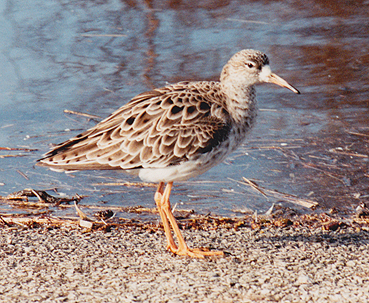
We'll start off with the last one. As 64% of voters all went with olive-sided flycatcher, I shall reveal that of course, that's what it was. I thought a few more might be tempted to go for other species, thanks to the unusual posture shown in this pic, but I really should know better than to underestimate you all!
Briefly, the other choices were gray catbird (11%) - this can be eliminated as the undertail coverts are clearly visible and lack the obvious rufous colour that would be visible. Similarly, catbird's black cap would show, and the overall colour of our bird is too subtle, catbirds are a striking slate grey.

Northern mockingbird garnered 23% of votes - I was expecting more to be honest. But, again the overall colour just isn't right, our bird is too brown and lacks any greyness. A mockingbird would have appreciatively shorter wings too, and a strikingly longer tail, among other things.
All voters ignored western tanager and eastern phoebe, and quite right too, as it looks nothing like either.

The previous mystery bird was clearly a wader (or shorebird, as is the preferred term in North America). 

Again, one species took the lion's share of votes. Ruff attracted a whopping great 75% of thumbs' up.
Upland sandpiper fooled just one voter (actually, that was me trying to throw you off the scent...), pectoral sandpiper seemed like a fair bet for 21% of you while no-one was inclined toward buff-breast.
So, was it a pec? What about leg colour? Our bird has orange legs, not yellow ones as one would expect to see on a pectoral sandpiper. Slightly decurved bill, with an orange base certainly seems good, but doesn't that also fit adult ruff? And how about those bold white marks around the eye? And those clearly barred tertials? All things that point squarely to ruff. And so it was.

The new mystery bird should prove interesting - you might need to think outside of the box (to use a tired and frankly irritating phrase) with this one... 

Wednesday, 17 August 2011

Change of Scenery

Jenny's sister Chrissie arrived in BC last weekend, with her partner Andy and their two boys Louie and Laurie.
As they were having a week on the mainland before coming over to the island, we went over to join them for a camping trip to Squamish - a place we hadn't been to for several years.
I didn't get much birding in, but we had a great time exploring Alice Lake, Shannon Falls and ascending the impressive Stawamus Chief (pictured).

The only birds worth mentioning include a food-carrying Swainson's thrush, a warbling vireo feeding fledged young, and a lone cackling goose (pictured) that was being decidedly picked on by the local Canada geese at Alice Lake.
It was fully winged and could fly, so what on earth it was doing here in August I have no idea...
Incidentally, the ferry journey each way was utterly unremarkable, birds-wise.

Panama Flats Falls Flat

This afternoon, I spent a couple of hours trawling around the increasingly waterless Panama Flats.
As far as shorebirds were concerned, there were only 20 least sandpiper, 7 western sandpiper and a single greater yellowlegs present on the diminishing pools when I arrived. However, 5 green-winged teal had dropped in.
A check of the muddy creeks only added 3 more least sandpipers, a single killdeer and 2 spotted sandpiper.

Canada Dry... an increasingly waterless Panama Flats
As I returned to the 'pools' a group of 8 western sandpiper flew in, soon joined by a further 58, bringing the total to 73.
Just goes to show that anything could drop in at any time of the day!
Mind you, without any rain forecast I suspect it might be a while before we have much to see down there.
But, as I say, you just never know...
To get an idea of how much the water levels have dropped, just compare the pic here with the one in the post below - taken from roughly the same spot last week.

On my way home I made a short detour to Clover Point. A couple of red-necked phalarope were bobbing around offshore as were the usual murres and auklets, plus a marbled murrelet.       

Friday, 12 August 2011

Pectoral Pair Pip Peeps

The south eastern corner of the southern pool
With a couple of hours to kill mid-morning, I was drawn to good old Panama Flats once more.
With the numbers of off-passage birds moving through here changing on a daily basis, it's hard not to be consumed by the possibilities of what may show up during the fall.
Of course, that's water-level dependent and the way things are going, we're not going to have much to entice a passing rarity before long...
Meanwhile, there were still some decent birds around today.
The number of peeps has diminished considerably - I counted 48 western sandpipers and just 17 least sandpipers. The tringas still seem relatively happy, with 9 greater yellowlegs and 8 lesser yellowlegs actively feeding around the place. 

A couple of killdeer were kicking around and a pair of pectoral sandpiper (one pictured) were in the far south east corner of the southern pool.
A couple of juvenile spotted sandpipers were still hanging around in the creeks on the Carey Road side, but there was no sign of any solitaries.

Wednesday, 10 August 2011

Brit Birder in Wader Heaven

I dropped Jenny of at work for 9am this morning and decided to head out once more to Panama Flats in search of transient waders.
There were pretty much the same sorts of numbers of birds present as yesterday (minus one, thanks to a successful sorte by an adult peregrine...).
I roughly estimated around 140 western and 70 least sandpipers, plus 9 greater & 7 lesser yellowlegs.  A single pectoral sandpiper was also present, as was a dowitcher.
While I was scanning through the birds, and checking the outer areas for such things as Baird's sandpipers, I was joined by Brent Beach - another local birder I only knew through having seen his postings on the local birding forum.

While we were chatting and searching, he picked up a semipalmated sandpiper that I'd completely missed. Better still, it came very close and gave us great looks and allowed for the two pics here to be taken.
Ignoring the westerns feeding out in the deeper water, it was keeping company with least sandpipers in the wet muddy areas. It was clearly a juvenile bird, but I was thrown initially by its 'buffness', but apparently (as I read later) early juvs may show a buff breast.

Other birds seen included 4 killdeer and in the vegetated creek to the east of the pools, a solitary sandpiper and 3 spotted sandpipers.
The birding here is really great at the moment and the birds are extremely tolerant of human presence and general disturbance. As long as one exercises sensible fieldcraft, the views of some of these shorebirds can be amazing.

The shot of 2 lesser yellowlegs here was taken with a standard compact camera with a 3x zoom!   

I popped into Swan Lake briefly on my way home, but it was nearing midday and the place was pretty quiet, bird-wise. The only things of note that I saw included 6 least and 2 western sandpipers, and a Wilson's warbler.   


Tuesday, 9 August 2011

Flats Life

The day started out cloudy and cool, and I headed off to Panama Flats this morning to see whether the overcast conditions had dropped any new birds.

As I walked down to central bund toward the pools from the Carey Road end, I noticed an adult river otter and her 3 cubs running along the muddy shore of the northern pond.
The Canada geese got a bit flighty, but the majority of shorebirds seemed relatively unconcerned.
The otters had a splash around in what little water they could find and the animals eventually ran toward me, passing within a few feet (pictured).
Having a quick scan over the pools it was good to see that there were plenty of birds around.
I counted approximately 140 western sandpipers and 71 least sandpipers feeding in the muddy waters, but couldn't locate any semi-p sands among them.

There was a lone pectoral sandpiper, and a solitary sandpiper (pictured) present as well as 4 killdeer and a long-billed dowitcher. 
There were also 9 lesser and 12 greater yellowlegs in the area. 
Mallard numbers have increased too, with around 80 birds present. Among these somewhat suspect ducks were a couple of creamy-coloured 'farmyard' mongrels.


Friday, 5 August 2011

Return To Panama Flats

3 greater & 1 lesser yellowlegs
Once again, my mind was filled with passage waders this morning so I grabbed my 'scope, and customary optimism, and headed across to Panama Flats for a spot of quality Victoria wetland birding.
And by the look of things, I'd better enjoy it while it lasts.
The glorious weather we've been enjoying lately has taken its toll, and the water is fast receding...
Anyhoo, the muddy pools still held a few birds and over the course of a couple of hours the following were noted:

Killdeer 6
Greater yellowlegs 6
Lesser yellowlegs 11
Solitary sandpiper 1
Spotted sandpiper 4
Pectoral sandpiper 1
Western sandpiper 19
Semi-palmated sandpiper 1
Least sandpiper 47
Short-billed dowitcher 2

Pectoral sandpiper
Both the least and western sandpipers counts are likely underestimates, given their mobility and constant moving around the site.
Other birds present included the ubiquitous barn swallows, plus a couple of cliff and at least 1 northern rough-winged swallow. Oh, and several 'the heron'. And, of course those big stinky noisy geese and a few duckies.

I also had the pleasure of meeting Aziza Cooper for the first time, a Victoria birder with whom I am familiar via her frequent postings on the local birding forum. Slowly, I'm starting put names to faces, and getting to figure out who some of the more active local birdwatchers are.

When I got home, there was a small, silent empid catching flies in the apple tree. It was rather greenish, with a largish pale bill and whopping great eye ring and a bit of a crested appearance. If I were a gambling man, my money would probably be on Pacific-slope flycatcher. But, I'm not a gambling man, and its identity shall remain a mystery...

Wandering tattler - not wandering
Later, after walking downtown with Jenny, who was heading for an evening shift at Eddie Bauer's, I strolled back home via Dallas Road and the splendid Victoria waterfront.
First stop was Ogden Point where my old friend the wandering tattler was defying its moniker and remaining spectacularly loyal to its regular roost. As I was armed with Jen's new camera, I couldn't resist another shot...
The remainder of the walk was rather birdless, and even Clover Point failed to excite. Possibly, the kite surfers, paragliders, dog walkers, kite flyers and other assorted show-offs had collectively scared everything two miles offshore.       

Wednesday, 3 August 2011

Not so solitary sandpiper...

It was a little cloudy overnight, and I woke up with thoughts of grounded migrant shorebirds. Not how everyone greets the day, admittedly, but as we birder's know, the urge to follow our instincts can be just as strong as our quarry's desire to move south at the breeding season draws to a close.

So, I headed to my new favourite Victoria birding spot; Panama Flats.
The northern pool looked pretty lively as I approached, and through my bins I could see plenty of avian activity. There were lesser yellowlegs all over the place, and I counted at least 13. By comparison, 11 greater yellowlegs were also present.
As I scanned through the least sandpipers and western sandpipers, a larger bird caught my eye.

An adult solitary sandpiper. Nice. The bird gave excellent views as it fed close to me, among other species. A few minutes later I picked up another, this time a juvenile, and after about half an hour the two birds were feeding together.
I counted 46 leasts and 17 western sandpipers in total, but due to the fact that they were constantly moving around the area, these counts were probably conservative under estimates.
Also present were a single semi-palmated sandpiper, 5 killdeer, 5 spotted sandpiper and 13 short-billed dowitchers. The dowitchers called clearly identifying themselves as short-billed - I suspect that when I saw 13 'long-billed'  a couple of days ago, my interpretation of their brief calls was faulty, to say the least!
Good numbers of barn swallow were around too, and among them I noticed at least 2 cliff swallows and a northern rough-winged swallow. A single purple martin also flew through, but carried on in a southerly direction.

Monday, 1 August 2011

Farewell to Friends, Hello to Solitary Sandpiper!

On Saturday Jenny and I headed up island once more. Our good friends Rich & Lori Mooney, along with son Nolan, had finally booked their flights and were heading off to a new life in Surrey, England within a matter of days. We had to say our farewells!
Somehow or another (!) Rich and I managed to arrange one last bit of birding and spent some time scouring Holden Creek, while Jen and Lori walked to Jack Point.  

Jenny, me, Lori & Rich
To be honest, it was pretty dire. A killdeer and 4 least sandpiper were the sum total of our shorebird finding efforts.
Other stuff included a purple martin, peregrine, red-tailed hawk, osprey, American goldfinch and a pair of Eurasian collared dove (cor!).
To be honest, it wasn't strictly about the birding, but the opportunity to spend a bit of time together before they left for old Blighty... Bon voyage Rich, Lori & Nolan - and good luck in the UK!

Today (BC Day as it happens), I got out for a couple of hours to Panama Flats, late morning.
Quite a contrast to my last visit a few days ago.
The pools were notably busier with waders, and there were 7 lesser yellowlegs, 11 greater yellowlegs, 5 western sandpiper and 29 least sandpiper present, along with 13 long-billed dowitcher.
A couple of killdeer were in the grassy area on the eastern edge and at least 4 spotted sandpiper were seen. 

Best of all, however was the solitary sandpiper that had so far eluded me.
This is the first I've seen in Canada and as such, makes it on to my BC list!
At one point the obliging bird even had a good stretch, showing off that distinctive rump that clearly separates it from green sandpiper, a species I am very familiar with. Lovely!
So lovely, in fact, that I've included two photos here for your delight...

Once again the many swallows were on good form and went into a twittering panic when a peregrine came by. It was interesting to watch the least sandpipers, in particular, respond to the hirundines' alarm calls.
They would assume a crouching position, flattening themselves low in the mud or water while watching out for the overhead predator.

Later in the day, Jenny and I had a walk down to Ross Bay, Victoria. A drake white-winged scoter was swimming around close inshore, while we also spotted the usual rhinoceros auklets, pigeon guillemots and what-not.

Friday, 29 July 2011

Dragonfly Delights

After a spot of dealing with various bits of bureaucracy, I found time late afternoon to make my way up to Panama Flats, just to see if there had been any interesting arrivals.
The two main pools still retain quite a bit of water, but it's disappearing fast.
For the meanwhile it does at least means that there's plenty of shallow water and muddy edges to entice passing waders, so the coming weeks could be really productive. Potentially.
The number of greater yellowlegs had increased slightly since my last visit, and there were 9 present, plus a single lesser yellowlegs. At least 7 spotted sandpiper were around, and just 6 least sandpiper.
I scoured every small vegetated pool and creek but still didn't manage to dig out a solitary sandpiper...
A group of 6, what sounded like, long-billed dowitchers were feeding together on one pool, while another pair of silent dowitchers were feeding on another.
There were around 20 killdeer in the more vegetated areas of the fields. Of course, a handful of mallard and 130 or so Canada geese were here too, as always.

There was lots of dragonfly action, with common whitetails especially numerous in some areas.
A few darners (California or blue-eyed) were also around, plus a couple of cardinal meadowhawks (pictured).
For those back in the UK, as you can see meadowhawks are sympetrum dragonflies - known in Britain as darters.

Wednesday, 27 July 2011

Birding Panama Flats

Now that I am officially unemployed (a temporary measure, one sincerely hopes), at least I have a bit more time on my hands to get out birding. Every cloud, and all that...
So, I spent a couple of hours this morning at Panama Flats, one of my favourite Victoria birding sites. It was considerably quieter than when I came with Rich at the weekend, but there were still a few birds around worth looking at.
On the more northerly of the two larger pools, a single lesser yellowlegs was feeding, and before long was joined by a greater yellowlegs and a mercifully vocal short-billed dowitcher.
A further 4 greater yellowlegs (roosting bird pictured) were on the other pool, though no other waders other than a couple of spotted sandpiper were to be seen.

An adult peregrine flew in, and sat up in the dead tree (pictured) - much to the irritation of the many barn swallows in the area. Small numbers of northern rough-winged, violet-green and cliff swallows were also hawking over the fields and pools.
I eventually found a group of just 6 least sandpiper feeding in a small muddy pool, alongside a juvenile killdeer. Another couple of spotted sandpipers showed up including a not-yet-fledged fluffy youngster.
The swallows' alarm calls signalled the arrival of 3 turkey vultures as they drifted low over the area, and as I looked up I noticed an adult and an immature bald eagle sailing over, high.
A female belted kingfisher flew through, noisily, but carried on in a southerly direction - perhaps to Swan Lake?
Insects-wise, there were a few Lorquin's admirals around, as well as blue-eyed or California darners (I need to get a really good look at one of those to determine which...) 

Monday, 25 July 2011

A Tale of Two Tattlers - Brit Birders on Shore(bird) leave

On Sunday I was joined by my chum Rich Mooney, who had decided he wanted to do some birding around Victoria in advance of his pending return to England after several years in BC.
I had a bit of work to do, so we didn't get out until midday, but nevertheless, we had a great afternoon and managed to clock up some 13 species of shorebird.

We started out at Panama Flats and soon located a small gathering of feeding waders, in the first of the two remaining larger pools. Here were saw 1 greater and 2 lesser yellowlegs (one pictured below, in comedy pose), 5 dowitchers (silent, but we suspected were long-billed), a spotted sandpiper, 15 least sandpiper, 1 western sandpiper, 1 semi-palmated sandpiper and a pectoral sandpiper (pictured above). Not a bad start!
The next pool was somewhat quieter with just another spotted sandpiper and 2 more greater yellowlegs.
We walked around the southern perimeter, and in a ditch just below Carey Road we came across another trio of greater yellowlegs and a family party of spotted sandpipers (1 ad, 3 juvs). We also had ace looks at lots of common whitetail dragonflies, and saw a meadowhawk sp. and a couple of unidentified darners... and western tiger swallowtail.

There were fewer killdeers present than on my last visit, with just a small family group seen. We came across another juv spotted sandpiper, and made our way down the central bund, once again grilling the small group of scattered waders we had initially encountered. 
Satisfied with our haul, we headed to the coast, stopping first at Oak Bay Marina. The wonderful sunny weather had brought out the crowds and the birds were pretty thin on the ground. We added black oystercatcher to the growing shorebirds list, and also noted the usual pigeon guillemots offshore.

Hoping that the wandering tattler was still in the Ogden Point area, we decided to check it out. Again the hordes were out enjoying the sunshine but we soon located the tattler roosting on a rock below the breakwater. And next to it - another tattler! (pair pictured)
We had a quick scan around the harbour, noting 11 black turnstone on the Pier A wall, along with more black guillemots.
We headed back with the intention of walking along the breakwater so that we could look down onto the tattlers but soon noticed that they had disappeared from the rocks. As we passed the pilot boats we relocated them, just feet away from us. One of the birds was quite vocal, and they showed wonderfully in the bright sunlight.
   
Next stop was Clover Point. From here we spotted rhinoceros auklets, a common murre, more pigeon guillemots and 8 surf scoter offshore. A lone Heermann's gull sailed by, and we were rather surprised to see a flotilla of 26 red-necked phalarope feeding on the water's surface.

So all in all, a wonderful afternoon's birding. There was a real sense that things are really starting to change, and that autumn's just around the corner... It was good fun to get out with Rich for what may have been our last Canadian field excursion together!

Wednesday, 13 July 2011

Evening Wader Watch

After finishing work today I managed a visit to Panama Flats, keen to see if there were any waders present. 
Water levels were generally pretty low, bar the two main pools. There were good numbers of barn swallows feeding all over the place, plus a handful of violet-green and a couple of northern rough-winged swallows.
A group of 6 dowitchers were on the bank of the larger pool. When they flew, they called and they all sounded like long-billed.
Around the pools edges were 3 spotted sandpipers.
In the far south east corner, in a vegetated muddy area. there were approximately 230 peeps feeding. Scoping through them, the ratio of birds seemed to be about 60/40 western to least sandpipers.
After around 45 minutes of thorough scanning, I finally picked up a single semi-palmated sandpiper among them. Another spotted sandpiper was also here as were up to a dozen killdeer, including 2 very young, unfledged birds.
Walking back, I noticed a pair of greater yellowlegs (pictured) that had appeared from somewhere or other.
At one point a peregrine came through, spooking everything, before sitting up in a bare tree to the consternation of a local robin.

Sunday, 15 May 2011

Shorebirds Bonanza

After a night of constant rain, we awoke to find Victoria grey, and still under attack from persistent precipitation.
By late morning I'd decided that while songbirds were likely going to be hard to find today, I could at least go out and see what watery aves were to be had. I used my new-found knowledge of the area's top spots and chose to explore Panama Flats a little bit more than I had when I was out with Ian last week.
I started off scanning, in the pouring rain, from the vantage point off Carey Road. Again, the place was alive with literally hundreds of hirundines. Among the numerous tree, violet-green and barn swallows were several cliff and handful of northern rough-winged swallows.
Out on the water I could see 5 northern shoveler, 8 gadwall, 4 green-winged teal, 6 bufflehead and 2 pintail, as well as several mallard.

Dunlin & long-billed dowitcher
Toward the back of the flooded fields were groups of dowitchers, all those I could tentatively ID looked like long-billed. I counted a total of 52. A single dunlin and other smaller peeps were just about visible through the falling rain.
After a while I decided to head round and check out access from the other side.
Parking up on Roy Road, I soon found an access point and walked in through some promising looking mixed habitat, until I found myself on the western edge of the waterlogged area.
The rain was easing off slightly and visibility was considerably better from this side.
I could even be sure about the identity of at least some of the dowitchers now as they could be heard from time to time. All those that called were long-billed dowitchers.
I could also see the smaller calidrids too, and there were 5 least and 10 western sandpipers feeding alongside the dowitchers and the lone breeding plumage dunlin.
A sudden deterioration in the weather at least brought a couple of Vaux's swift down and they briefly joined the hawking swallows over the water.

A Wilson's snipe was feeding on a grassy spit, surrounded by several American pipits (pic). At least 3 spotted sandpiper were also present, but sadly no solitary sandpiper - my 'target' bird of the day...
A common yellowthroat was singing in some waterside vegetation and a female appeared alongside a ditch at the southern edge of the pools.
I was quite surprised to see a late female common goldeneye; she didn't hang around to long and flew off north. 

Pectoral sandpiper (left) & western sandpiper
On my return back up the pool edge I noticed another wader out in the water that had suddenly 'appeared'. Through bins it appeared largish and pale, with a distinct breast and yellowish legs... a pec? I got my scope on it - yep, a pectoral sandpiper. Close by, another dunlin had joined the first. Had these two birds arrived together in the last downpour or had they been hiding somewhere?
Unfortunately the crappy weather prevented me from getting any decent shots, but the pic here should at least confirm its identity!
I found a few of these last spring, up island at Holden Creek (including a couple of males in breeding plumage), but I'm aware that they are pretty scarce down here at this time of year.

Friday, 13 May 2011

That Was The Week That Was

Blogger's been ill, so I haven't been able to post until now. So, if you're sitting comfortably, I'll begin...
 
This morning, it was fairly quiet down at Government House with nothing to indicate any birds new in. What was presumably a remnant of yesterday's fall; 12 yellow-rumped warbler, 1 Townsend's warbler and a warbling vireo were moving around in a single feeding flock, and a single Lincoln's sparrow emerged to check out my pishing but that was about it.

Thursday Fall

A bit of a fall was evident early Thursday morning in the grounds of Government House, Victoria.
It seemed pretty quiet until I jammed into a flock of around 30 yellow-rumped warblers feeding high up in some garry oaks, along the lower path. Scanning through I came across 6 Townsend's warblers, 2 ruby-crowned kinglet and a Wilson's warbler. An empidonax flycatcher showed briefly but flew off, silently.
As I moved along the path, a Cooper’s hawk came bombing along and just missed my head.
The distinctive clucking of a hermit thrush was emanating from the understory, and a little persuasive pishing lured it out, but nothing else.
I came across another active warbler flock, this time comprising around 10 yellow-rumped and 2 Townsend's along with a warbling vireo (my first of the year).
Then I noticed a smart olive-sided flycatcher (another year-tick) sallying from a snag.
I decided to gain some height, to check the tree tops and went to the small ‘balcony’ outlook where I was surprised to come eye to eye with a varied thrush.
The olive-sided was visible from here too, and gave better views but there was nothing in the upper branches of the trees.
On the eastern bluffs I saw another olive-sided flycatcher, but otherwise there was little activity there so I headed home for breakfast.

Wednesday Whirlwind

On Wednesday afternoon I had the pleasure of being given something of a guide tour of Victoria and Saanich Peninsula birding hotspots by Ian Cruickshank.
We started off at Panama Flats where, thanks the persistent downpour, the flooded fields were swarming with 100s of hirundines, including a few cliff swallows and one or two northern rough-winged swallows, plus good numbers of Vaux’s swifts (year tick).
Scanning the muddy fringes we noticed a congregation of feeding dowitchers, and a few least sandpipers.
Three spotted sandpiper (year tick) were also working the edges and common dabbling ducks punctuated the water’s surface including several shoveler and a pair of gadwall.

Among other places we visited included Observatory Hill - an impressive spot affording immaculate views. Here we added such things as chipping sparrow, Pacific-slope flycatcher (YT), American goldfinch and house wren (YT).
We came across dowitchers, mostly looking like long-billeds, at several sites including a group of just over 100 at 'Red Barn Flats'. This interesting site, (so named for its location right by, yep, you guessed it - a red barn, well the Red Barn Country Market more precisely.. ) was also teeming with swallows.

purple martin
A stop at Maber Flats proved interesting with a breeding plumage black-bellied plover, more dowitchers and 18 purple martin (2 of which, pictured).
A flock of 40 cackling geese dropped in and a single greater white-fronted goose made an unexpected appearance.
Along the path, the hedgerow was jumping with YR warblers and I finally caught sight of my first yellow warbler of the year.

Later, we had a brief check of the Martindale area where the highlight was an adult female northern harrier.

After a quick stop at Island View Beach where we watched a Caspian tern fishing, we headed back.
It was great to be in the company of someone who knows not only the area, but the birds so well.
Ian's incredibly acute hearing, and ability to ID everything that calls, was a grim reminder that my battle-worn ears are well and truly past their sell-by date.
Add to that, my relative lack of familiarity with the region's birds' vocalisations and it's fairly obvious that I could be missing a not inconsiderable percentage of passerines while out birding. Oh well, at least my eyesight's still 20/20. For now...
Thanks again to Ian for his enthusiasm, and generous welcome to Victoria's birding scene!